
WINNING MINDSET FOR MSMES
Imagine this.
You run a small manufacturing unit in Pune, making speciality chemicals for a variety of industries. Your customer list is decent, your machines hum all day, and your cash flow—well, it’s okay.
But then a large Tier-1 supplier enters the picture. They have deeper pockets, automation lines, flashy presentations, and the ability to absorb losses for a quarter or two just to capture your client. Suddenly, you’re not just competing on product—you’re fighting on perception. How do you win this David vs. Goliath battle when the odds seem stacked?
The truth is: small manufacturers have advantages large competitors can’t replicate easily. The trick lies in playing your game, not theirs. Let’s unpack how.
The Power of Speed and Flexibility
Large competitors move like aircraft carriers—massive, but slow to turn. MSMEs are speedboats. You can pivot product lines, revise production schedules, and approve design tweaks faster than any committee-run corporate giant. That agility is an untapped weapon.
Here’s what it looks like in action:
- A custom packaging manufacturer in Coimbatore wins export clients by offering same-week design changes that bigger players take a month to approve.
- A small tools supplier in Rajkot captures repeat orders by promising 48-hour prototype delivery—made possible because the owner personally green-lights decisions.
Speed is not just efficiency—it’s smart positioning. Emphasize turnaround times in your branding. When clients see “Made-to-order, delivered-fast manufacturing,” they perceive you as proactive, not small.
Build Deep, Human Relationships
In the world of manufacturing, relationships are currency. Large corporations automate communication—ticketing systems, standard forms, and rigid processes. MSMEs thrive on direct phone calls, quick problem-solving, and owners who actually show up when there’s an issue. This personal touch creates trust that multinationals struggle to match.
The golden rule: people buy from people they know, like, and trust. Use that advantage. Make your client relationships so sticky that switching suppliers feels risky.
Action ideas:
- Offer joint product development sessions with client engineering teams.
- Send quarterly “shop floor updates” showing transparency in operations.
- Celebrate client milestones online—humanize partnership beyond transactions.
You’re not selling just a product. You’re selling reliability with a human face.
Turn Your Size into a Story
Let’s address the elephant in the room: scale. You don’t have it. But that’s not a weakness—it’s a narrative you can own. Position yourself as specialized, craft-oriented, or high-touch. Lean into your niche and make large competitors look generic.
Think of it like how artisans and boutique brands thrive in a world of mass production. Small doesn’t mean small-time. It means sharp focus.
Storytelling angle examples:
- “Unlike large suppliers, every batch we make is personally inspected by our founder.”
- “We’re built for clients who value precision over scale.”
- “We partner with your engineers, not just your purchase department.”
On LinkedIn, share behind-the-scenes stories—photos of your workers building custom jigs, a workshop clip of a complex machining setup, or lessons from your apprenticeship days. Narratives like these attract empathy, credibility, and pride.
Innovation without Fancy Labs
You might not have R&D wings or patent libraries. But innovation doesn’t always come from whiteboards in air-conditioned rooms; it happens on the shop floor. Encourage your machine operators, welders, and foremen to identify micro-innovations—techniques that cut setup time, reduce scrap, or improve ergonomics. Then, give them credit publicly.
Examples:
- A Ludhiana-based MSME reduced downtime by 18% after an operator developed a simple clamp system.
- A ceramic manufacturer in Morbi created a customized drying rack that shortened lead time by 12 hours.
Call it Jugaad Innovation. It’s practical, repeatable, and cost-effective. Turn these stories into case posts online. Client’s love seeing suppliers who keep improving—even with limited resources.
Technology as a Leveler
Digital transformation sounds fancy, but for MSMEs, it means one thing: visibility and control. Here’s how to start small:
- Use affordable ERP systems like Tally Prime or Zoho Inventory for real-time data.
- Deploy barcoding or QR-based tracking for work-in-progress.
- Integrate WhatsApp Business for instant order updates.
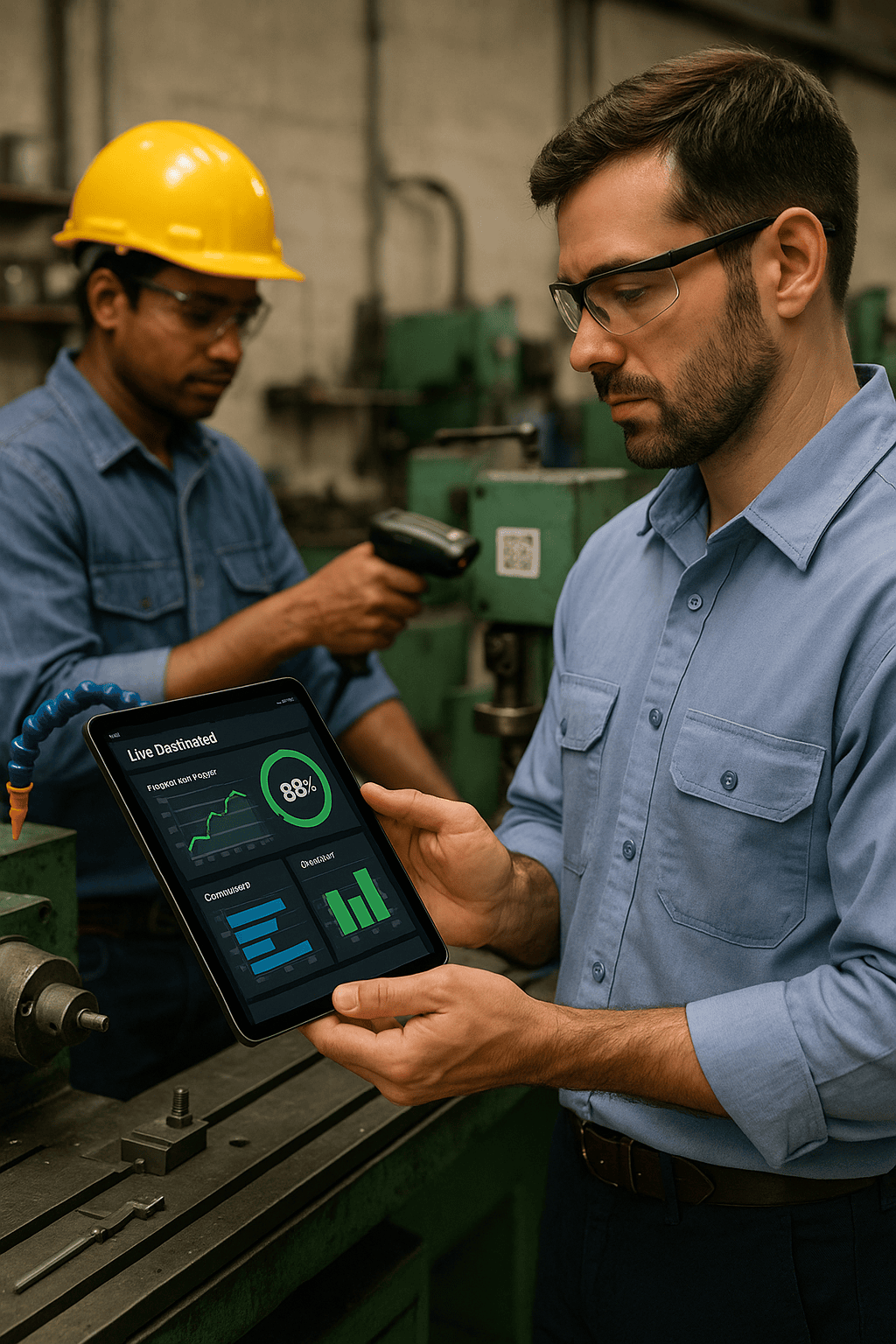
These small tools create large perceptions. When a buyer sees a digital dashboard showing live production status, they subconsciously place you on par with larger companies.
And in 2025, perception drives purchase decisions more than pricing does. Also, explore B2B marketplaces and export platforms—IndiaMART, Tradewheel, and Alibaba Trade Assurance can help your brand reach clients you could never afford to visit physically.
Sustainability as Differentiation
Global buyers increasingly expect sustainable sourcing. Large manufacturers spend crores on ESG compliance—but MSMEs can start small and still stand out. Examples:
- Shift from diesel forklifts to electric ones.
- Recycle coolant and packaging material.
- Install solar panels for partial energy offset.
Document and communicate these actions: photos, metrics, and audits. Put a small “Sustainably Manufactured” badge on your invoices and website. For many multinational customers, sustainability has become a tie-breaker factor in procurement. Green practices don’t just save costs—they win contracts.
Create a Brand, Not Just a Business
Most MSMEs in India don’t brand themselves—they just sell parts. But even B2B companies buy stories. A professional identity creates trust at first glance. A simple, modern logo, a crisp website showing your process, testimonials, or short videos of your facility—all these build authority instantly.
Platforms like LinkedIn, YouTube Shorts, and Instagram Reels aren’t just for tech startups; they’re new-age shop floors for visibility. Instead of another technical post, try this:
“Every part that leaves our factory in Pune has been checked by a father of two, trained with 20 years of experience in precision grinding.”
That’s a story, not a catalogue line. Consistency is key—keep showing, not telling.
Collaborate, Don’t Compete
There’s power in collective strength. MSMEs can join clusters, co-develop capabilities, or share resources through associations and industrial parks. Example: A group of sheet-metal manufacturers in Nashik jointly invested in a laser cutting unit and now bid for larger contracts together.
Strategic collaboration turns “small suppliers” into integrated partners. If competition is inevitable, co-opetition—competing yet collaborating—drives shared growth. As India’s manufacturing ecosystem matures, such micro-clusters will become an essential growth model.
Financial Discipline as a Superpower
Cash flow kills more MSMEs than competition ever could. Instead of chasing every order, focus on profitable orders. Learn to price correctly by factoring in indirect costs—maintenance, power, rework, quality rejects.
Also, digitize your cash flow tracking. Even simple Google Sheets forecasting can expose liquidity gaps early. Negotiate advance payments strategically. Offer slight discounts for upfront payments—it’s cheaper than borrowing.
Remember: Cash flow is oxygen. Guard it ruthlessly.
Build a Culture People Brag About
Machines build products. People build companies. You can’t compete with large players on salaries, but you can compete on culture. If your workers feel respected, safe, and heard, productivity follows naturally.
Invest in:
- Weekly improvement huddles
- Safety awards
- Up skilling or certifications (partner with local ITIs)
- Family days or welfare bonuses
A loyal, skilled workforce creates consistency—and in manufacturing, consistency is the ultimate badge of quality.
The New Era of Mighty MSMEs
India’s MSMEs aren’t underdogs anymore—they’re the backbone of our manufacturing GDP, responsible for over 30% of industrial output and 45% of exports. The game isn’t about scale versus smallness anymore. It’s about relevance, adaptability, and storytelling.
You don’t need billion-dollar plants to win. You need clarity, creativity, and conviction. When clients see that spark, they’ll pick your agility over someone else’s bureaucracy every single time.
If you’re a manufacturing leader reading this—start now. Pick one strategy from this article and implement it this month. Share your story online, tag #MakeInIndia, and watch how visibility compounds. Because in today’s world, the best manufacturers don’t just make products—they make noise that moves markets.
If you need help to implement these ideas, suitable for your business — reach out to us at phoenix.advizory@gmail.com or +91-9967093949. Let’s help Indian MSMEs compete effectively, one corporate Goliath at a time.