
Structured Process Improvement is your Growth Engine
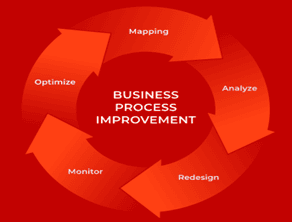
Business process improvement isn't just corporate jargon—it's the difference between growth and stagnation in today's highly competitive market, especially for MSME manufacturing companies. Consider this shocking reality: 90% of senior decision-makers admit legacy systems prevent them from embracing new technologies and becoming more efficient. Even more concerning, employees waste an average of 12.6 hours per week on low-value, repetitive tasks . That's more than an entire workday lost to inefficiency every single week.
The consequences of neglecting structured improvement are severe. A Microsoft study found that over 90% of consumers would take their business elsewhere rather than work with a company using outdated technology. Meanwhile, employee disengagement from inefficient processes can cost MSME companies between 3-8% of their annual costs in lost productivity. Unfortunately, many businesses continue relying on quick fixes and improvisation rather than implementing systematic frameworks for continuous improvement.
Process improvement isn't about optimization for optimization's sake—it's about building an organization that runs smarter, faster and stronger . Every business has standard processes that help achieve objectives efficiently, but structured approaches offer numerous benefits: increased productivity, enhanced quality, cost reduction, and improved customer satisfaction . Additionally, effective business process improvement methodology helps companies adapt to changing market conditions, ensuring sustained growth and competitive advantage.
The Problem with Jugaad: Why Quick Fixes Fall Short
In contrast to structured improvement, the "jugaad" mindset—India's celebrated culture of improvisation—has become both a source of pride and a significant business liability. While jugaad offers creative solutions with limited resources, it's increasingly recognized as a double-edged sword that can undermine long-term business success.
How jugaad became a default mindset
Jugaad refers to actions taken to overcome severe conditions by improvising effective solutions with limited resources [1]. Initially celebrated as a hallmark of Indian ingenuity, jugaad became deeply embedded in business culture because it allowed organizations to adapt quickly to unexpected challenges [1]. However, what began as a necessity has evolved into a default mindset that relies on plan B rather than excellence [3]and there have been calls for "abolishing jugaad from the Indian lexicon," noting how it limits potential for scale and excellence India's chief economic adviser V. Anantha Nageswaran[3].
The hidden costs of unstructured problem-solving
Unstructured processes—the business equivalent of jugaad—are costing organizations a tremendous amount in lost productivity, lack of compliance, and other factors [4]. In fact, although most businesses focus improvement efforts on structured processes, — and consequently unmonitored, unmanaged, and unruly as much as 60% of an organization's processes are unstructured[4].
These hidden costs manifest in several ways:
·Decreased operational efficiency as unstructured data adds complexity to management systems [5]
·Incomplete or inconsistent information leading to poor decision-making [5]
·Higher storage and IT resource expenditures, which can spiral out of control [5]
·Disjointed customer communication resulting in poor customer experiences [5]
When improvisation turns into inefficiency
The jugaad spirit, once common in Western economies too, gave way to structured approaches as those economies matured [6]. Though jugaad offers flexibility, it fundamentally creates a philosophical conflict: efficiency typically comes at the cost of flexibility [7]. Furthermore, the improvisational nature of jugaad often addresses symptoms rather than root causes. This approach is similar to "pumping air into a bike tire with a hole"—the fix is fleeting while the failure persists [8]. Quick fixes might seem cost-effective initially but lead to higher costs over time through continuous band-aid solutions requiring frequent maintenance [9].
Ultimately, jugaad's biggest limitation is its inherent nature as an idiosyncratic response rather than a team activity. Almost by definition, it doesn't lend itself to scalability [10]. When organizations rely on improvisation without structure, they might create clever solutions to immediate problems—but sacrifice the systematic improvements necessary for sustained growth.
What is Structured Process Improvement?
Imagine your business as a car. Jugaad might get the car moving temporarily, where as structured process improvement will result in the engine overhaul that keeps the car running smoothly for years. This systematic approach transforms how organizations operate at their core.
Definition and core principles
Structured process improvement is a systematic approach to enhancing the efficiency and effectiveness of business operations [11]. Unlike random fixes, it provides a repeatable framework for identifying, analyzing, and optimizing processes to drive better outcomes sustainably [12]. At its heart lies a straightforward process:
·Define clear improvement objectives
·Connect strategic, tactical, and operational improvement meetings
·Use accurate information to make informed decisions
·Take effective actions based on these decisions [13]
The foundation of this methodology is fully focused on achieving better outcomes [10]. Structured improvement typically focuses on reducing unnecessary steps, streamlining communication, automating repetitive tasks, and enhancing quality [10].
How it differs from reactive fixes
Structured improvement stands in stark contrast to reactive problem-solving. Instead of obsessing about outputs (results), it emphasizes inputs (information, decisions, and actions) that lead to excellent outcomes [13]. Many organizations rely on managers' intuition to drive improvement, yet this approach lacks sustainability [13]. Conversely, structured improvement follows standardized procedures that create repeatable decision-making processes across all levels [13]. This proactive stance identifies potential roadblocks early, preventing problems before they escalate [3].
Why structure leads to scalability
The true power of structured improvement emerges as organizations grow. Standardized procedures ensure that expansion doesn't compromise quality or efficiency [2]. Furthermore, documented processes make training new employees easier and maintain consistent standards [14]. For businesses seeking long-term success, a structured approach to process improvement creates sustained focus on key objectives across all organizational levels [13]. Moreover, established process libraries help companies evaluate and implement changes with significantly less risk [15]. Above all, structured improvement is scalable and sustainable—the essential difference between temporary fixes and genuine transformation [13].
7 Business Benefits of Structured Process Improvement
Looking beyond theory, structured process improvement delivers tangible advantages that directly impact your bottom line. Here's how a systematic approach transforms business performance across critical areas:
1. Boosts employee productivity
Effective process improvement eliminates unnecessary steps and redundancies, allowing employees to focus on value-adding activities [16]. Process optimization also increases employee satisfaction as well as employee engagement as they spend more time on meaningful work [18] and they feel more motivated and empowered to collaborate [4].
2. Improves customer satisfaction
Streamlined processes lead to quicker response times and better customer experiences [5]. By identifying bottlenecks and pain points in customer journeys, organizations can deliver products and services faster and with fewer errors [19]. In fact, process improvements directly correlate with higher customer satisfaction scores[20], improved conversion rates and stronger customer relationships [5].
3. Reduces operational risk
Structured improvement helps identify potential threats and vulnerabilities proactively [21]. Through regular risk assessments, companies can prioritize efforts and allocate resources effectively [22]. Indeed, operational risk management provides better C-suite visibility and more informed business risk-taking [23]. This systematic approach ultimately minimizes disruptions and ensures greater financial stability [21].
4. Ensures regulatory compliance
In today's complex regulatory landscape, structured processes are essential for maintaining compliance [7], by integrating compliance requirements directly into workflows, reducing friction and preventing violations [7]. Notably, organizations using automated compliance processes report reduced compliance-related costs [24]. A structured approach also provides clear documentation and audit trails—crucial during regulatory scrutiny [25].
5. Enhances agility and adaptability
Organizations with structured yet flexible processes can pivot quickly when market conditions change [4]. The goal is permeable boundaries with few, simple rules that enable flow rather than control it [26]. This balanced approach creates organizational "resonance," where structure, people, and work are in tune [26]. Companies that embrace business agility can respond swiftly to opportunities with innovative solutions [27].
6. Drives cost-efficiency
Process optimization directly impacts the bottom line by:
·Reducing waste and operational costs [28]
·Improving resource utilization [11]
·Streamlining workflows [29]
·Eliminating inefficiencies [8]
Many global organizations use cost optimization to ensure stability and fund future investments in areas like digital transformation [28].
7. Enables better technology integration
Structured improvement facilitates smoother adoption of technologies like automation, AI, and advanced analytics [9]. This integration provides real-time visibility into processes, allowing tracking of performance metrics instantaneously [9]. Additionally, the combination of lean principles with emerging technologies improves visibility, flexibility, and responsiveness while reducing errors [30]. Ultimately, technology-driven improvements lead to enhanced productivity, cost savings, and greater customer satisfaction [9].
How to Start Your Process Improvement Journey
Ready to transform your organization? Starting a process improvement journey requires both strategic thinking and tactical execution. Let's break down the essential steps:
Step 1: Map your current processes
Gain a clear understanding of your existing processes through detailed mapping. This visual representation helps you see how work flows through your organization and where inefficiencies might be hiding [31]. Using flowcharts or SIPOC diagrams allows you to document each step, providing an accurate picture of your current operational state [32].
Step 2: Identify bottlenecks and redundancies
Once your processes are mapped, analyze them to find bottlenecks—points where work slows down or gets stuck. Look for excessive wait times, redundant steps, or processes with high error rates [6]. Useful approaches include:
·Analyzing performance data (cycle times, throughput, work-in-progress levels) [33]
·Gathering input from frontline teams through surveys and interviews [33]
·Conducting root cause analysis using methods like the 5 Whys [32]
Step 3: Choose the right methodology (Lean, Six Sigma, etc.)
Selecting an appropriate improvement methodology provides structure to your efforts. Popular options, based on your specific challenges and organizational culture [35] could include:
·Lean: Focuses on eliminating waste and maximizing customer value [34]
·Six Sigma: Aims to reduce defects and variations in processes using data-driven techniques [1]
·Plan-Do-Check-Act (PDCA): Tests solutions on a small scale before large-scale implementation [34]
Step 4: Involve stakeholders early
Engaging stakeholders from the beginning ensures better outcomes. It fosters ownership, helps secure resources, and builds trust in the process [36]. Include everyone affected by the changes as well as those directly implementing them [1]. This collaborative approach increases the likelihood of stakeholder buy-in as they feel valued and respected [36].
Step 5: Set SMART goals and KPIs
Effective improvement requires clear objectives. Set SMART goals—Specific, Measurable, Achievable, Relevant, and Time-bound [10]. For example, instead of "improve website performance," aim for "generate 100 new, good-fit contacts monthly within 3 months" [13]. Establish relevant KPIs to measure success, such as cycle times, defect rates, or customer satisfaction metrics [37].
Step 6: Build a roadmap for continuous improvement
Finally, create an improvement roadmap that outlines your journey. This could include stages like "Wishlist," "Agreed to Action," "Being Actioned," "In Review," and "Completed/Signed Off" [13]. Make your roadmap accessible to everyone involved, enabling them to track changes, priorities, and completion status [13]. Remember that improvement is an ongoing process—regularly review results and adjust your approach accordingly [32].
Conclusion
The choice between structured process improvement and jugaad represents a fundamental decision about your business's future. While quick fixes might seem attractive in the moment, they ultimately create a cycle of inefficiency that undermines long-term success. Structured improvement, on the other hand, offers a sustainable path to growth that scales with your organization. Moving beyond jugaad doesn't mean abandoning creativity or resourcefulness. Rather, it means channeling these qualities into systematic frameworks that deliver consistent results.
Businesses that embrace systematic improvement gain significant competitive advantages. Your organization becomes more agile, responsive to customer needs, and operationally efficient. Additionally, you'll find yourself better positioned to integrate new technologies and adapt to changing market conditions without disruption.
The journey from improvisation to structure happens one step at a time. Start by mapping your current processes, identifying bottlenecks, and selecting the methodology that best fits your needs. Before long, you'll see tangible improvements in productivity, customer satisfaction, and cost efficiency. Remember that process improvement isn't a one-time project but an ongoing commitment. Each improvement cycle builds upon previous successes, creating a culture of excellence that permeates your entire organization. This cultural shift might be challenging at first, nevertheless, it delivers extraordinary results that improvisation simply cannot match.
The time to move beyond jugaad is now. Your competitors are already streamlining their operations and enhancing their capabilities through structured improvement. Will you continue patching holes in your processes, or will you build an engine of sustainable growth that powers your business for years to come? If you’re keen on starting this journey, reach out to us at phoenix.advizory@gmail.com or call at +91-9967093949.