
MSME Success Stories in Indian Manufacturing
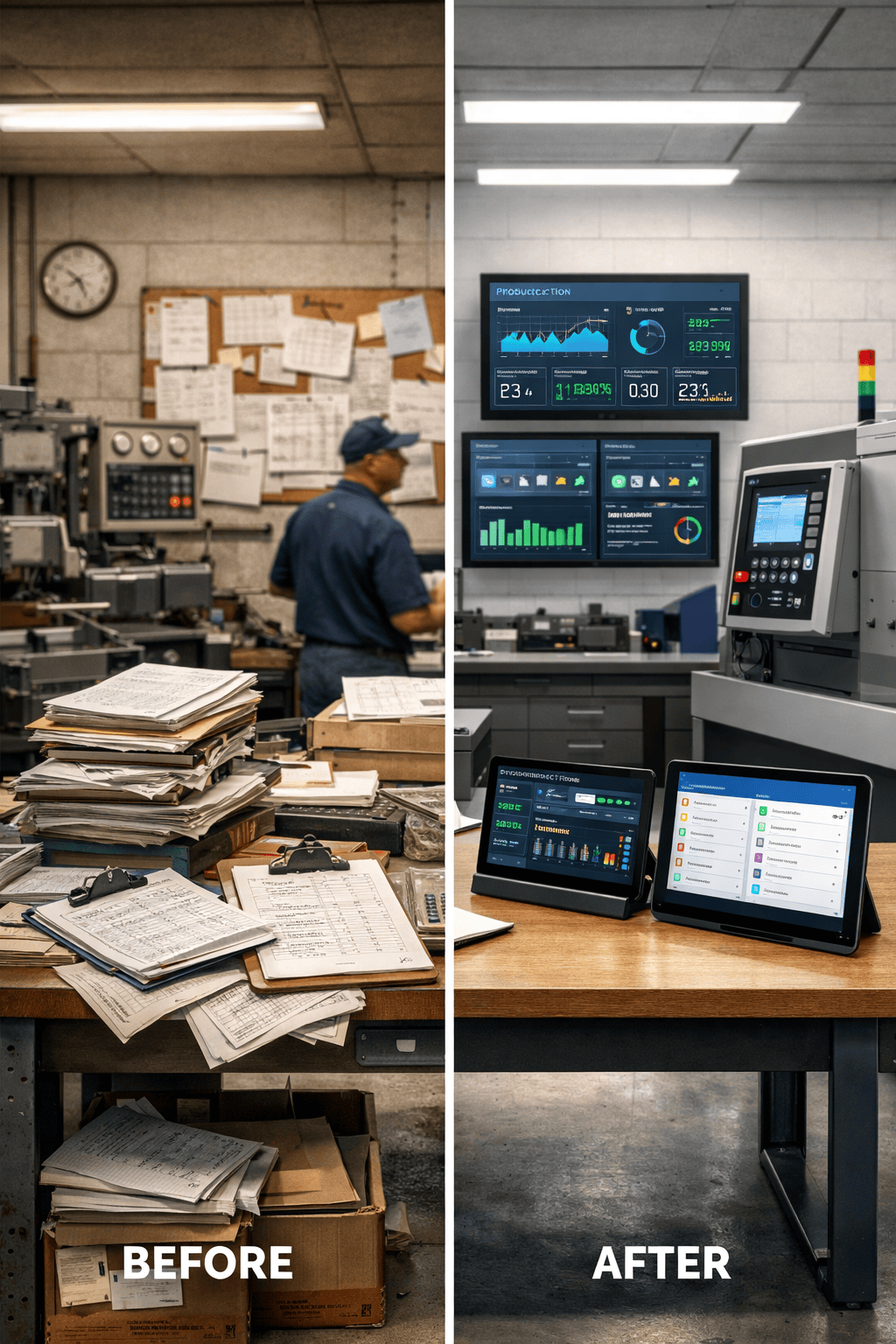
If there’s one thing every manufacturing business owner has heard lately, it’s this: “Go digital or get left behind.” Sounds dramatic, right? Especially when you’re running a small or medium-sized manufacturing unit in places like Coimbatore, Rajkot, or Faridabad — where budgets are tight, manpower is limited, and every rupee counts.
But here’s the surprise: some of India’s most inspiring digital transformation stories aren’t coming from giant conglomerates. They’re coming from local MSMEs — family-owned shops, 100-person plants, toolmakers, and component suppliers — quietly transforming how Indian manufacturing works. So today, let’s break down how small manufacturers are pulling this off, what’s really working, and most importantly — how you can start simple.
The Myth of “Digital = Expensive”
When we say digital transformation, many CXOs imagine robots, AI dashboards, and massive IT budgets. But the reality on India’s factory floors looks different.
Take Raghav Precision Tools (name changed) from Pune — a 45-person CNC parts supplier. A few years ago, they faced constant production delays. Orders ran late. Operators used paper logs to track jobs. The owner, Mr. Raghav, spent half his day firefighting.
Instead of diving head-first into Industry 4.0 jargon, he made a small, smart move: he installed digital production tracking through a low-cost cloud ERP designed for MSMEs. Within three months:
- Downtime dropped by 22%
- On-time deliveries improved by 30%
- Raghav could finally plan his weekends — something he hadn’t done in five years
No robots, no fancy sensors. Just visibility. That’s digital transformation made simple.
The Turning Point: Why MSMEs Are Finally Shifting
Until recently, most MSME manufacturers saw “digital” as a corporate fad. They relied on gut feel and phone calls. It worked — until the pandemic hit. When supply chains froze, owners suddenly couldn’t reach plants, track jobs, or monitor shipments. That’s when many realized: “If I can track my Amazon order in real-time, why can’t I track my own production?”
This mindset shift is at the heart of India’s MSME transformation. And once owners start exploring, here’s what they find:
- Affordable tools: Cloud-based manufacturing ERPs start at less than a smartphone EMI.
- Government support: Programs like Digital MSME and initiatives under Make in India offer subsidies and training.
- Talent availability: India’s younger workforce is digitally-native — they want modern systems.
The playing field is levelling fast — and smart MSMEs are seizing the moment.
Case Study 1: From Chaos to Control in Coimbatore
Let’s talk about Sundaram Textool (name changed), a 70-employee precision components manufacturer in Coimbatore. They had a classic MSME challenge: growing order volume, but zero digital visibility. Schedules lived in Excel sheets. Quality data was handwritten. Customers kept asking for reports they couldn’t easily generate.
In mid-2022, their operations head decided to digitize step-by-step:
- Implemented barcode-based job tracking using tablets on the shop floor.
- Integrated quality checks into a low-cost mobile app.
- Linked both to an ERP accessible from mobile and tablet.
Within a year:
- Rework dropped 25%
- Customer complaints fell sharply
- The company secured a major export order from Germany — their digital transparency sealed the deal
The owner calls it the “best ROI after machinery.” He didn’t hire consultants. He didn’t need coding. Just commitment and a few weekend learning sessions.
Case Study 2: A Welding Shop Goes Smart in Rajkot
Shree Chem Tech (name changed), a small chemical factory near Ankleshwar with 35 workers, used to work entirely on verbal instructions and chalkboards. Then in 2023, the owner’s son — an engineering graduate — came home from college and said, “Let’s try something different.”
They started using WhatsApp-based work orders, linked to Google Sheets and QR codes placed next to stations. It wasn’t fancy, but it created a basic digital backbone.
- Production tracking problems dropped.
- Workers stopped repeating tasks.
- Customer updates became automatic.
When they later implemented an IoT-enabled energy monitoring plug (costing less than ₹20,000), they discovered that one machine was consuming 18% extra power due to a long-idling compressor. Fixing it saved them nearly ₹50,000 a month. One simple insight paid for months of digital investment.
Why Digital Success Isn’t About Technology
Successful MSME transformations aren’t led by software. They’re led by attitude. Here’s what the winning owners have in common:
- Curiosity over complexity: They ask “how can this help us work smarter?” instead of “which tool is best?”
- Small experiments, big learnings: They start with one problem — not a full blueprint
- People-first approach: They involve floor operators early to reduce resistance
In short, they treat digital like quality — a continuous improvement journey, not an overnight shift.
The Framework: How to Start Your Digital Journey
If you’re reading this as an MSME owner or CXO wondering “Okay, but where do I start?”, here’s a proven three-step path:
Step 1: Identify one pain point
Pick the single biggest daily frustration — late deliveries, paper-based approvals, machine breakdowns, or quality issues. Don’t chase buzzwords like AI or IoT yet. Start with what’s hurting your P&L.
Step 2: Try one digital fix
Explore simple tools that solve that one issue. For example:
- Cloud ERPs for order tracking (e.g., Kinetic, TranZact, Vyapar)
- Shop-floor data capture via QR/barcodes
- WhatsApp automation for approvals and reporting
- IoT energy monitors for machines
Make sure it’s affordable, scalable, and easy to onboard your team.
Step 3: Measure and expand
Once you see improvements — faster turnaround, less downtime, fewer errors — scale it gradually. The moment your team feels the benefit, adoption becomes organic. Momentum builds naturally. And suddenly… you’ve become digitally transformed, without realizing it.
The Payoff: Beyond Efficiency
Digitization isn’t just about streamlining operations. It’s about giving MSMEs a fighting chance in a global market. When your data is digital:
- Global clients trust you more (compliance-ready processes)
- You can forecast orders with real numbers
- You make quicker, evidence-based decisions
In an ecosystem where margins are thin and talent is scarce, digital gives smaller units scale without adding headcount. As one factory owner in Peenya put it: “For years, we thought digital transformation was for others. Now it’s our biggest competitive weapon.”
The Bigger Picture: India’s MSME Gateway to Industry 4.0
India has over 7.9 million manufacturing MSMEs, contributing nearly 30% of GDP. If even 10% go digital in the next few years, we’re talking about a massive productivity boom — and a stronger, smarter “Make in India” backbone.
This isn’t theory. It’s happening — quietly, consistently, across industrial clusters from Aurangabad to Hosur. The ones still waiting often say, “We’ll do it when we grow bigger.” But the truth is — MSMEs that digitize early end up growing because they went digital.
Ready to Take the First Step?
Digital transformation isn’t a one-time project. It’s about small, smart decisions that keep compounding. So here’s your challenge today: Pick one operational headache and explore a simple digital fix this month. Just one.
Every MSME success story you read here began that way — one small start, one bold decision. Because in Indian manufacturing today, digital transformation isn’t the future. It’s survival — made simple.
If you’re a manufacturing leader or MSME owner who needs help to make (or plan) your digital leap, reach out to me at phoenix.advizory@gmail.com or +91-9967093949. Your journey could inspire the next generation of Indian manufacturers.