
HOW INDIAN MSME's CAN GET AND WIN ONLINE
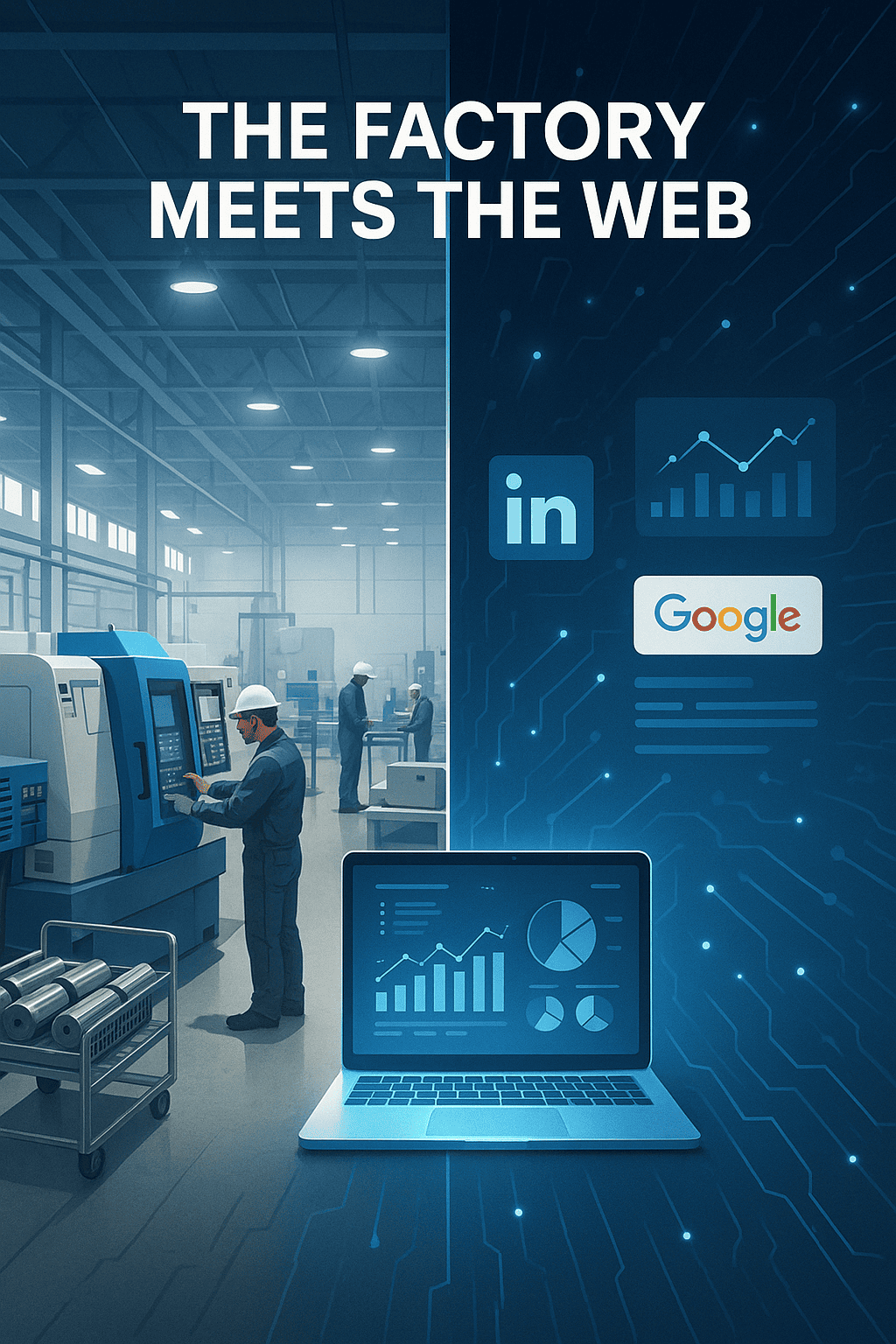
It’s Monday Morning.
Rajiv, who runs a precision tools unit in Pune, opens his laptop with a sigh. A competitor posted a slick new video on LinkedIn last night—factory floors humming, shiny CNCs, perfect lighting, a tagline about “empowering Indian engineering.” 500 likes. 20 leads.
Rajiv’s post—with honest photos of his team and tagline “Quality You Can Measure”—barely got 12. He mutters under his breath, “Maybe digital isn’t for folks like us.” But that’s where he’s wrong.
In 2025, digital isn’t optional for manufacturers—it’s how new customers find you, how OEMs vet you, and how global suppliers decide if you’re worth their email reply. And the best part? You don’t have to spend a fortune. Let’s talk about how Indian manufacturers can actually get found online, without breaking the bank.
The Digital Dilemma
If you run a manufacturing business, you already know this paradox. Your customers—OEMs, exporters, sourcing heads—don’t walk into your factory unannounced anymore. They Google, they scroll through LinkedIn, they check reviews, and then they shortlist vendors.
But here’s the kicker: most manufacturing websites in India look like they were made in the Windows XP era.
- Blurry photos
- Outdated certifications
- No contact response
- "Under Construction" pages lingering since 2018
That’s not just bad design—it’s a lost opportunity. Because in today’s digital supply chain, if you’re not visible online, it’s almost as if you don’t exist.
Why “Going Digital” Isn’t What You Think
Most factory owners think digital marketing equals spending lakhs on SEO agencies and Google Ads. That’s a myth. Digital marketing is just the systematic science of being discoverable, credible, and visible to the right buyers.
It’s not about flashy social media—it’s about building digital trust. And that starts with some simple, high-ROI steps that even a small or mid-sized manufacturer can pull off.
Step 1: Fix the Foundation — Your Website Is Your Factory Gate
Your website isn’t a brochure; it’s your digital shop floor. Buyers judge your professionalism, delivery discipline, and quality standards by it—often unconsciously.
Here’s how to make it count, even on a shoestring:
- Keep it clean and mobile-first. More than 70% of B2B decision-makers browse on mobile phones.
- Show proof, not promises. Post clear photos of your machines, materials, QC processes, and certifications.
- Answer buyer intent. Add pages like “Industries We Serve,” “Certifications,” or “Case Studies.”
- Make it action-ready. Have one clear call-to-action—like a WhatsApp button, quote form, or email link that actually works.
If your website tells your story clearly and loads fast, you’ve already outrun 80% of your local competition.
Step 2: Make Google Work for You (Not Against You)
Ranking on Google feels mysterious. But for manufacturers, you don’t need to beat Amazon or Tata Steel. You just need to show up when someone searches for something like “CNC machining supplier in Pune” or “Sheet metal fabrication manufacturer India.”
Two affordable levers can do this:
- Google My Business: It’s free. Fill it completely—photos, hours, map, categories, products. Encourage your clients to leave reviews. Local buyers trust these stars more than any award.
- Keyword-based pages: Instead of one “Products” page listing everything, create individual pages—one per key product or process. Example: “CNC Milling Services Pune | Rajiv Precision Tools.” Search engines love relevance.
Consistency beats budget here. A few well-optimized pages can outperform paid ads in the long run.
Step 3: LinkedIn Is the New Trade Fair
Old model: You spent ₹2 lakh for a stall at IMTEX, shook hands, and handed out catalogues. New model: You spend ₹2,000 on a videographer, post a short clip of your new process innovation on LinkedIn, and let it reach 10,000 industry eyes organically.
LinkedIn is where your buyers hang out—purchase managers, engineers, distributors, and sourcing consultants. You don’t need a corporate PR team. Just be authentic:
- Share your team’s small wins or new machine installs.
- Talk about manufacturing challenges you’ve solved—like reducing tool wear or improving tolerances.
- Post short videos (under 60 seconds) shot on your shop floor.
- Comment genuinely on posts by potential buyers, industry partners, or government schemes.
Even one post per week can build awareness faster than a year of cold calls.
Step 4: Leverage Buyer Platforms and Directories
Global sourcing has moved online. Platforms like IndiaMART, TradeIndia, Fibre2Fashion, ExportersIndia, and even Alibaba act as discovery engines for B2B buyers. Instead of spraying money on premium listings, focus on:
- Uploading crisp photos and full specifications for your top 10 products.
- Responding fast to inquiries (the first reply often gets the order).
- Asking satisfied buyers for visible reviews or repeat orders via chat.
These portals are your digital sales partners—if managed well, they can generate warm leads 24/7.
Step 5: Turn Content into Credibility
Manufacturers have one unfair advantage: real stories. Your machines, teams, processes—these are fascinating when told right. And content turns them into magnets for customers.
You don’t need grand storytelling or fancy animation. Just do these simple things:
- Write short posts explaining a process—like why your anodizing quality matters.
- Post before-after product photos on LinkedIn or your website.
- Share “Day in the Factory” reels—raw, unpolished, real.
Remember, buyers want to know that you know your stuff. Content signals expertise—and that’s priceless trust currency.
Step 6: Explore Low-Cost Lead Gen Tools
You don’t need to buy ₹50,000 monthly ads. But some small-budget tools can stretch your reach:
- Run ₹500/week Google Search Ads on niche keywords like “CNC machining for automotive bracket suppliers India.”
- Use LinkedIn Sponsored Posts for one flagship product or certification announcement.
- Try email automation tools (like MailerLite or Zoho Campaigns) to stay in touch with past leads.
The point isn’t volume—it’s precision. A focused campaign reaching 500 right people beats a generic one reaching 50,000 random users.
Step 7: Train Your Sales Team to Think Digital
Your front-line sales and marketing staff need a mindset shift. Teach them to:
- Respond faster to online leads.
- Use CRM tools (even Google Sheets + reminders) to track follow-ups.
- Document successful client outcomes—they make perfect LinkedIn or website content later.
Your digital marketing only works if your human marketing supports it.
Step 8: Measure, Learn, Adapt
Unlike traditional marketing, digital gives feedback within days. Use that data:
- Which pages got the most visits?
- Which posts brought new inquiries?
- Which keyword searches are driving traffic?
You can improve with every campaign—without increasing your spend. Free tools like Google Analytics, Search Console, and LinkedIn Insights can give all this data. You just need to check it once a month.
The Mindset Shift: Stop Thinking B2B, Start Thinking H2H
At the end of the day, purchases in manufacturing are still human-to-human.
Buyers want to work with transparent, dependable, and visible partners. When they see your posts, videos, and testimonials, they don’t just see a company—they see you.
That’s powerful. That’s brand equity money can’t buy.
A Real-World Example
A small die-casting unit in Coimbatore implemented just three simple things:
- Refreshed their website with better images and keyword tags.
- Started posting one LinkedIn “tech tip” every Friday.
- Responded to all IndiaMART leads within two hours.
In six months, they landed three export clients and got shortlisted by a major auto OEM supplier. Their total spend? Under ₹15,000. That’s what systematic visibility can do.
The Bottom Line
Your factory is probably brilliant at efficiency, precision, and delivery. Now, your marketing just needs the same discipline. Digital visibility is no longer about deep pockets—it’s about smart, consistent execution.
If you can optimize a machining process, you can optimize a LinkedIn post. If you can run a Kaizen improvement, you can run a content calendar. The tools are free, the audience is waiting, and opportunity doesn’t care about your marketing budget.
Start today. Open your website and LinkedIn page. Ask yourself—does this reflect who we really are as a company? If not, fix one thing this week: a photo, a headline, or a “Contact Us” button. In digital marketing, small manufacturers don’t lose because of size. They win because of authenticity.
And if you’d like me to help implement these guidelines suitable for your business — reach out to me at phoenix.advizory@gmail.com or +91-9967093949. Let’s get Indian SMEs available online, one area at a time.