
HOW PREVENTIVE UPKEEP SAVES LAKHS: STORIES FROM THE SHOP FLOOR
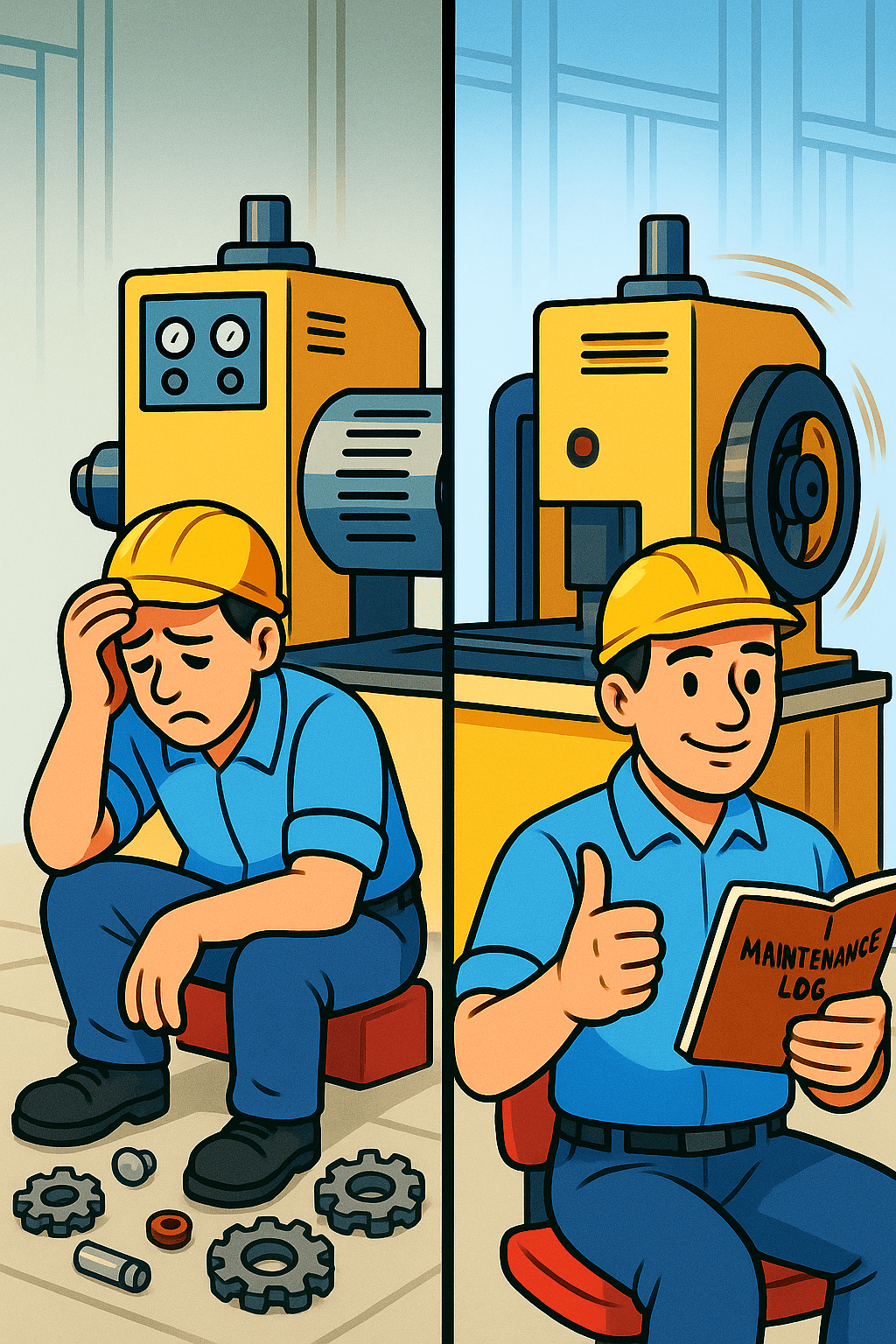
Imagine this.
It’s a busy Monday morning. Orders are waiting. Trucks are lined up at your factory gate.
And just when the machines should be humming, a critical press motor sputters… and dies. Production halts. Workers stand idle. The customer service team starts fielding calls about delays. And in a matter of hours, as the minutes tick by, the losses quietly mount—extra shifts, penalties, wasted raw material, missed delivery commitments, and worst of all—trust.
That one breakdown sets you back not just lakhs of rupees, but weeks of credibility with your client. Now here’s the twist—this entire crisis could have been avoided. Welcome to the world of Preventive Maintenance, or as I like to call it, maintenance magic.
The Silent Cost of Neglect
Most MSME manufacturers in India don’t prioritize structured maintenance. After all, daily survival is hard enough—chasing orders, managing cash flow, juggling vendors. It’s easy to push maintenance into the “we’ll deal with it when it breaks” bucket.
But here’s reality: reactive, breakdown-driven maintenance is like playing Russian Roulette with your machines.
- A single spindle downtime in a CNC line can cost ₹25,000–₹50,000 per day.
- A blown furnace coil in a foundry can result in scrap worth lakhs.
- One failed compressor can idle an entire paint shop.
And these are only the direct costs. Add ripple effects—customer complaints, delayed shipments, stress on your team, and rework. Suddenly, what looked like a minor breakdown becomes a profit leak you never budgeted for.
Stories from the Shop Floor
Let me take you inside three real shop floors (names changed, lessons intact):
Case 1: The Stubborn Bearing
A Pune-based auto ancillary unit supplying precision parts had a grinding machine with a tiny vibration for weeks. The operators noticed it, reported it, but the decision was “let’s push it till the weekend shutdown.”
Result? The bearing gave way mid-shift. The spindle jammed. That machine stood idle for four days, with the OEM part flown in at double price. Losses: ₹4.8 lakhs in direct downtime and overtime. All for a ₹2,500 bearing change that could have been scheduled.
Case 2: The Cowboy Compressor
In a Delhi NCR paint shop, the central compressor didn’t receive its routine filter replacement. “Too busy” was the excuse. A year later, the compressor’s efficiency nosedived. What should have been a ₹15,000 preventive fix ballooned into a full overhaul costing ₹12 lakhs. The bigger loss? Their biggest automotive client shifted orders to a competitor due to missed timelines.
Case 3: The Heroic Planner
Contrast that with a small machine tool maker in Coimbatore. They instituted a simple preventive maintenance calendar—weekly checks, oiling schedules, and quarterly overhauls. Operators were trained to log noises, leaks, or overheating instantly. The result? Not only did they cut breakdowns by 60%, they actually used maintenance as a selling point during client audits. Customers appreciated the discipline and reliability—helping them win bigger contracts with larger OEMs.
The Psychology of Postponing Maintenance
Why do we delay preventive upkeep?
- It doesn’t feel urgent — machines are running today, so why stop them?
- Invisible costs — the impact of downtime isn’t immediately visible, but the repair bill is.
- Cultural inertia — in many MSMEs, maintenance culture hasn’t yet matured beyond a “fix when broken” mindset.
But here’s the trap: what feels like “saving money” in the short run usually costs multiples in the long run.
The Numbers Don’t Lie
According to industry studies:
- Preventive maintenance can cut breakdowns by 50% or more.
- Every ₹1 spent on preventive upkeep saves ₹3–₹5 in avoided repairs and downtime.
- Well-maintained equipment lasts 20–40% longer than neglected machines.
For a small manufacturer with ₹10 crore annual turnover, even a 2–3% productivity gain by lowering breakdowns can unlock ₹20–30 lakhs per year. That’s not a trivial number—it’s the difference between struggling with working capital and having breathing room.
Making Maintenance Magic Work for You
Here’s the good news: you don’t need fancy IoT platforms or million-rupee software to start. Even a structured, paper-based preventive plan can save lakhs. What matters is discipline.
Step 1: Audit Your Machines
Create a simple asset register. List every major machine, its critical components, installation date, and last service. You’d be surprised how many SMEs don’t even have this basic visibility.
Step 2: Schedule the Unsexy Stuff
- Daily: Check oil, coolant, air leaks, unusual vibrations.
- Weekly: Clean filters, tighten belts, log readings.
- Monthly: Detailed inspection of critical wear parts.
- Quarterly: System-level overhauls (lubrication, alignment, calibration).
Remember: the boring, repetitive checks are what prevent disasters.
Step 3: Train Operators as Sensors
Your operators spend 8–10 hours daily with the machines. Train them to notice and report abnormalities. Empower them, because preventive maintenance is a team sport, not just the maintenance guy’s headache.
Step 4: Build a Maintenance Calendar
Put it on the wall. Make it visible. Tick it off. The psychology of consistency will drive compliance.
Step 5: Track Downtime Metrics
Measure how many hours each machine stood idle due to preventable breakdowns. Nothing drives accountability like data staring back at you.
Beyond Saving Money—The Strategic Payoff
Preventive upkeep doesn’t just save money; it changes how your business is perceived:
- By Customers: A reliable supplier with low defect rates and predictable delivery.
- By Employees: A workplace that values discipline and reduced chaos.
- By Auditors/Certifiers: A company ready for ISO audits and long-term contracts.
- By You: A business that is not firefighting but planning growth.
And in today’s competitive landscape, this operational stability can be a silent differentiator against competitors who are always running around putting out fires.
Closing Thoughts
Machines break. That’s a given. But whether they break in a controlled, predictable way, or in a messy, expensive breakdown—that’s a choice. Preventive maintenance is not rocket science. It’s common sense, done consistently. And in small manufacturing businesses, this is often the cheapest insurance policy you’ll ever buy—one that pays for itself many times over.
So the next time you hear a strange hum on the shop floor, or see a filter ignored, or think “we’ll fix it later”—pause. Because that “later” can cost you lakhs. The magic is not in fancy technology. The magic is in discipline.
If you’re a CXO or factory owner reading this, here’s your challenge: by Friday, sit with your team and map out at least one preventive maintenance action that has been pending. Just one. Do it, and watch the ripple effects. And if you’d like more frameworks, tools, or real shop-floor stories about running a smoother, more profitable manufacturing business, reach out to me at phoenix.advizory@gmail.com or +91-9967093949.
Because together, we can turn “chalta hai” into “smoothly chal raha hai flawlessly.”