
Your guide to getting your MSME export ready
Picture this:
You’re sipping your morning chai while glancing at your order dashboard. One of your best machines hums steadily on the shop floor. You’ve built a solid business supplying auto components or precision parts here in India—it pays the bills, supports your team, and keeps production steady. But lately, the domestic market feels crowded. Margins are tightening. Bigger players are undercutting prices. And your customers? They’re all asking for cheaper, faster, better.
So, a thought crosses your mind. "What if I could sell to Europe? Or the Middle East? Or maybe even the US?" Welcome to the dream many Indian MSME manufacturers quietly nurture—going global. But going from “local hero” to “global supplier” isn’t just about finding a foreign buyer. It’s about being export ready.
The Big Opportunity You Might Be Missing
India’s manufacturing sector has quietly become a global darling.
Between China+1 supply shifts, demand for cost-effective sourcing, and government initiatives like PLI schemes and FTAs, the world is actively hunting for reliable suppliers from India.
A McKinsey estimate suggests that Indian manufacturing exports could touch USD 1 trillion by 2030 if MSMEs step up. That’s not fantasy—it’s a footrace, and the starters’ pistol has already fired. Yet, here’s the reality check: Only a small fraction of MSMEs are actually ready for export-level operations.
Why? Because exporting requires more than a good product—it requires a system that consistently delivers global quality, compliance, and reliability.
The Harsh Truth About Export Readiness
There’s a dangerous misconception floating around: “If my parts are good enough for an Indian OEM, they’ll be good enough for a foreign buyer.” Unfortunately, that’s like assuming if you can make a great cup of filter coffee at home, you can open a Starbucks.
Export markets have their own language—of documentation, logistics, certifications, and performance. Miss one line item in compliance, and your shipment could be stuck at port—or worse, blacklisted by a paying customer. Let’s break down what export readiness really means for an MSME manufacturer in India.
Export Readiness for MSME manufacturers
Step 1: Check Your “Global Quality” Quotient
Before you send a single quote overseas, ask one hard question: Is your quality system export-grade? That means having consistency in everything—from raw materials to process validation to packaging. Global buyers love predictability. A single variation is often a deal-breaker.
Here’s where to start:
- Get familiar with international quality standards such as ISO 9001, IATF 16949, AS9100 (aerospace), or ISO 13485 (medical).
- Invest in traceability and documentation—lot numbers, inspection certificates, and material test reports aren’t optional.
- Encourage a culture of “zero defect exports.” It’s not just about machines; it’s about mindset.
Think of your quality management system as your passport. Without it, you won’t cross many borders.
Step 2: Get Your Logistics and Documentation in Order
If your dispatch team thinks “export packaging” means bubble wrap and a wooden crate, it’s time for a reality check. Every market has its own norms for labelling, barcoding, fumigation, and even pallet standards. A mismatch can cause customs delays worth lakhs.
Key readiness points:
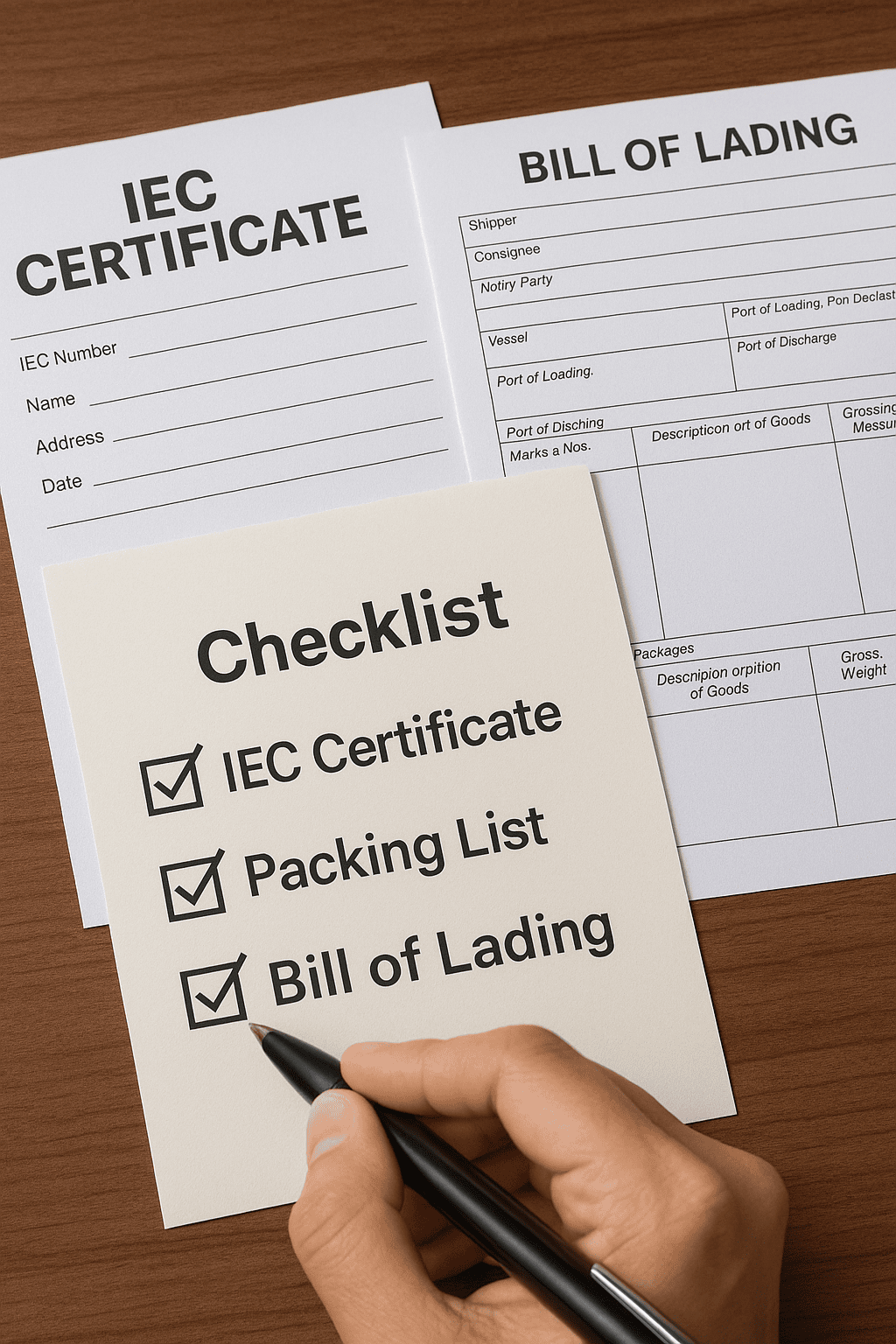
- Standardize your export documentation—commercial invoice, packing list, bill of lading, certificate of origin, GSP forms, and payment terms documentation (LC, DP, DA).
- Partner with a reliable freight forwarder who can handhold you through the first shipments.
- Understand Incoterms (EXW, FOB, CIF, DDP). These three-letter words decide who pays freight, insurance, and customs duties—get them wrong, and you could lose your profit margin.
Export logistics isn’t paperwork—it’s risk management.
Step 3: Build Credibility Before You Pitch
Let’s be honest—Global buyers are cautious. They’ve been burned before. So how do you earn their trust when your company doesn’t yet have a global name?
Start small.
- Create a professional export brochure and website that actually speaks to buyers, not local customers.
- List on credible trade platforms (IndiaMART Global, Alibaba, ThomasNet, or specialized industry directories).
- Join export promotion councils (EEPC, FIEO, APEDA, or Chemexcil depending on your sector).
- Get on GeM and DGFT’s export readiness schemes to access training and trade missions.
Buyers notice consistency and credibility. In many cases, your digital presence is the first factory visit.
Step 4: Nail Your Pricing and Payment Terms
Many MSMEs lose deals not because of quality—but because they misprice or mishandle payment terms.
Here’s a quick guide:
- Benchmark your unit costs with export peers. Include freight, duties, taxes, and certifications.
- Never quote blindly. Clarify Incoterms and currency (USD, Euro, or GBP).
- Prefer LC (Letter of Credit) or 30% advance as standard for new buyers.
- Get familiar with export finance and credit insurance from ECGC and EXIM Bank—it could save your balance sheet if a buyer defaults.
Pro tip: be transparent. Global buyers value clarity over cheap rates.
Step 5: Get Help—You’re Not Alone
You don’t have to figure this out in isolation. India’s export ecosystem is full of hidden enablers created exactly for MSMEs like you.
Explore:
- DGFT schemes such as RoDTEP (Refund of Duties and Taxes on Exported Products).
- Credit support through EXIM Bank’s line of credit, SIDBI’s export finance, and ECGC’s shipment risk cover.
- Market access through Industrial Clusters and Export Promotion Councils.
- Skill programs on packaging, digital exports, and negotiation—often offered free via MSME-DI or EEPC offices.
Your first foreign shipment doesn’t have to feel like rocket science if you have the right partners.
Step 6: Build for Repeats, Not One-Off Orders
The best exporters don’t win by luck; they win through systems. Build internal processes that turn overseas inquiry to repeat business.
That means:
- A customer database with follow-up cycles.
- Performance tracking—On-Time Delivery (OTD), PPM defects, rejection logs.
- Digital records of correspondence and inspection reports.
- A culture of responsiveness—reply to RFQs within 24 hours.
Being dependable beats being the cheapest supplier every single time. Remember, export buyers invest in relationships, not just shipments.
Step 7: Invest in Branding—Not Just Quality
Let’s bust a myth: exporting success isn’t only about your unit cost or machine capability—it’s about perception.
Your buyer probably never visits your factory. They judge your reliability through:
- Your LinkedIn posts,
- Your email follow-ups,
- Your responsiveness on WhatsApp,
- And the professionalism of your documents.
That’s your brand. You can be a world-class manufacturer sitting in Coimbatore, Rajkot, or Hosur if your brand voice speaks confidence and trust.
The Emotional Payoff
Every exporter remembers their first overseas payment hitting the bank. It’s not just about the money—it’s proof that your work is world-class. That’s pride. That’s validation. That’s what every MSME founder dreams of. But getting there takes patience, preparation, and perspective.
When your first shipment lands on time, clears customs smoothly, and earns a “repeat order” email—it feels better than any subsidy ever could.
Your 7-Point Export Readiness Checklist
Before you start, check if you can tick these boxes:
- My quality system meets at least one recognized international standard (ISO/IATF).
- I have my IEC (Import Export Code) from DGFT, and a registered export bank account.
- I can prepare compliant export documentation or have a partner who can.
- I understand Incoterms and international payment norms.
- My products are labeled, packed, and certified per target market norms.
- I’ve identified at least two target markets and five potential buyers.
- I’m ready to invest time and effort into marketing, not just manufacturing.
If you said “yes” to 5 or more, you’re closer than you think.
The Bottom Line
Indian MSMEs have every reason to dream global. Our manufacturing strength, cost advantage, and growing credibility make now the best time in decades to enter export markets. But dreams turn into deals only when you move from aspiration to preparation.
So start where you are. Fix your systems. Build your brand. Send that first quote. Who knows—the next time you sip that morning chai, your product might already be sailing across the Arabian Sea to a delighted customer in Germany.
If you’re serious about making your MSME export-ready, start today.
Review your current operations against this guide, join your industry’s export council, and take your first small step toward going global. Because the question isn’t “Can Indian MSMEs export?” It’s “Why not yours?”
If you need help to implement these guidelines suitable for your business — reach out to us at phoenix.advizory@gmail.com or +91-9967093949. Let’s get Indian SMEs export focussed, one country at a time.