
BUILDING TRUST IN YOUR SUPPLY CHAIN
Imagine this.
Your production line is halted. Workers are waiting, machines are idle, and customers are calling every hour.
The only thing missing? A crucial raw material shipment that’s been “on the way” from your vendor for three days. Sound familiar? For many small and mid-sized manufacturers in India, this scenario is not a one-off occurrence, it’s a recurring nightmare. And what usually happens next is a series of frantic follow-ups—endless calls, chasing trucks, begging promises, and that familiar line: “Bas kal aa raha hai.”
But here’s the uncomfortable truth: if your supply chain relies on this transactional, follow-up-heavy approach, you’re not running a supply chain. You’re running a damage-control unit. So how do we move from stress-filled vendor management to supply chain confidence? By shifting focus from vendor follow-up to vendor partnership. Let’s break it down.
The Vendor Dilemma in Indian Manufacturing
In the typical small manufacturing setup, vendors are treated almost like shopkeepers: you place an order, you follow up, you pray it reaches you on time. The relationship is transactional, short-term, and often marred by mistrust.
- “Will they deliver on the agreed date?”
- “What if the quality is compromised?”
- “Should we spread risk across multiple vendors or give one a bigger share?”
The result: constant firefighting. But here’s what most owners and CXOs miss—vendors are not just suppliers of raw material. They are an extension of your business. Every missing shipment or delayed delivery doesn’t just hurt your production. It hurts your brand, your commitments, and your customer trust.
From Follow-up to Partnership: The Shift
Let’s consider the two possible approaches:
- The Vendor-Follow-Up Model
·Transactional which is highly price and delivery focussed.
·Communication is only when there’s a delay or problem.
·Trust deficit as both sides assumes the other is opportunistic.
- The Vendor-Partnership Model
·Collaborative where cost, quality, reliability, and innovation are shared openly.
·Communication is proactive with sharing of forecasts, plans, and challenges.
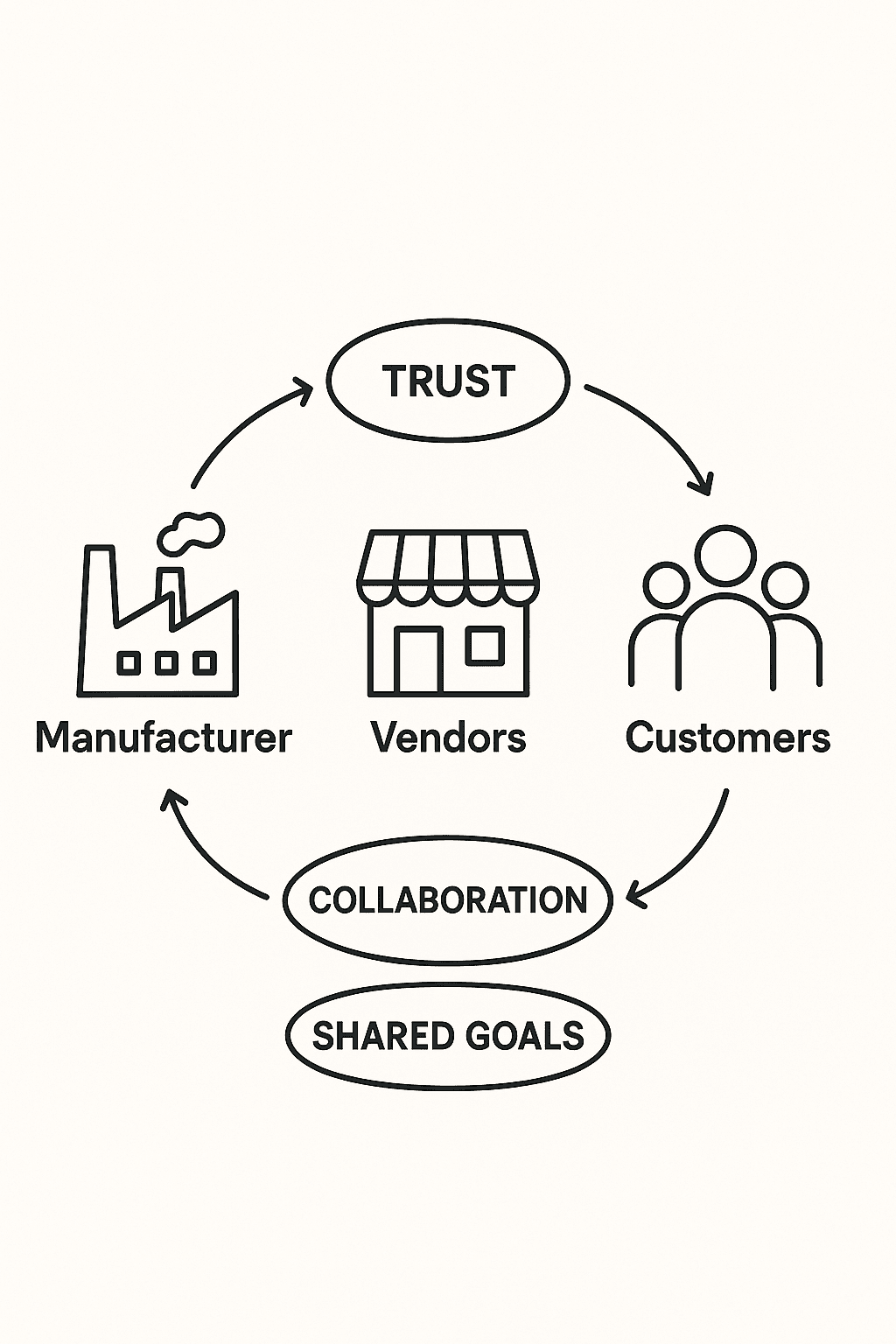
·Trust is a given as both sides see growth as mutual, not zero-sum.
Which one do you want driving your supply chain?
Why Vendor Partnership Pays Off
For a small manufacturer, partnerships sound like “big company stuff.” But the advantages are even sharper for smaller setups because you lack the buffer of scale:
- Reduced Uncertainty
When vendors trust you, they prioritize you – even in times of shortage. That’s your hedge against supply disruptions.
- Improved Quality
A vendor who feels like a partner invests time in understanding your standards, reducing rejections and rework.
- Faster Innovation
Struggling with cost pressures? Vendors often know cheaper grades, sourcing tricks, or process tweaks you wouldn’t discover alone.
- Better Cash Flow
Believe it or not, trusted partners extend better credit terms. Respect and consistency beat tough negotiations.
In short, the partnership model gives you a distinct competitive advantage.
A Tale of Two Manufacturers
Let me share a real-world example (names changed, of course).
- Case 1: The Firefighter
Rajiv runs a small auto components unit in Pune. Each week, his purchase officer is busy making calls like, “Where is the material? It was supposed to come yesterday.” The repeated delays mean his deliveries to large OEMs are always at risk. Rajiv thinks spreading orders across five vendors protects him. In reality, no vendor feels accountable because he’s just another buyer for them.
- Case 2: The Partner
Meanwhile, Kavita, who runs a similar unit in Chennai, decided three years ago to work closely with just two vendors. Instead of bargaining hard every time, she met them regularly, shared her production forecasts, discussed her growth plan, and highlighted how their timely delivery impacts her business. The result? Her vendors gave her priority supply during last year’s raw material crunch. Today, her rejection rate is down 30%, and she’s known among her customers for reliable delivery.
Partnership beats follow-up every time.
Building the Trust Bridge: How to Start
If you’re ready to make this shift, here are five actionable steps:
1.Share Forecast, Not Just Purchase Orders
Don’t just drop a surprise order on vendors. Give them visibility into your demand patterns. Even a ballpark production plan builds credibility.
2.Pay on Time
You can’t expect trust if you’re constantly delaying payments. Small actions like honoring credit terms speak louder than grand promises.
3.Collaborate on Quality
Instead of rejecting material and sending angry emails, bring vendors into your quality discussions. Solve problems together instead of pointing fingers.
4.Be Transparent in Crises
If you’re facing a slowdown or order dip, tell your vendor. Honesty prevents souring relationships and makes them more likely to stand by you later.
5.Recognize and Appreciate
A simple note of appreciation, a call saying “your on-time delivery really helped us,” goes a long way. Vendors are businesses too, gratitude builds loyalty.
The Mindset Trap That Holds Us Back
Many Indian manufacturers think: “If I get too close to a vendor, they’ll take advantage of me.” But here’s the reality—it’s mistrust, not closeness, that leads to exploitation.
When you constantly bargain, delay payments, or shuffle vendors, your suppliers also hedge against you. They inflate prices “just in case,” prioritize someone else’s orders, or compromise on quality. Trust creates efficiency. Suspicion creates hidden costs.
A Simple Thought Experiment
Ask yourself:
- If one key vendor shuts down tomorrow, what’s the cost to your business?
- Can you confidently say your vendors will stick their necks out for you in a crisis?
- Do you know your vendors’ biggest challenges as much as they know yours?
If the answers make you uncomfortable, it’s probably time to rethink your vendor strategy.
The Future of Supply Chains: Partnership as a Competitive Edge
Global supply chains are shifting fast due to uncertain freight costs, rising commodity prices, and customer expectations for reliability. For Indian SMEs, the “jugaad” model of chasing vendors only when things go wrong is not sustainable.
Your largest competitor tomorrow might not even be local—it could be an SME from Vietnam or Turkey, winning over the same customer base with consistent and reliable supply. And guess what? Their secret weapon will not be the cheapest labour. It will be supply chain trust.
Closing Thoughts
Every machine on your shop floor is only as reliable as the weakest link in your supply chain. Every delivery you promise to your customer depends on how much trust your vendor places in you. So stop wasting energy on desperate follow-ups.
Start investing in partnerships.
Because when a vendor becomes your partner, your supply chain stops being a headache—and starts being your strategic weapon.
As a manufacturing leader, you have a choice: Do you want your time spent chasing trucks and calls, or do you want to build a supply chain that works even when you’re not watching? If you’re ready to move from vendor follow-up to vendor partnership—take the first step this week. Call your top 3 vendors. That’s where trust begins. Need us to help, Reach out to me at phoenix.advizory@gmail.com or +91-9967093949. Let’s rebuild Indian Supply Chains, together.